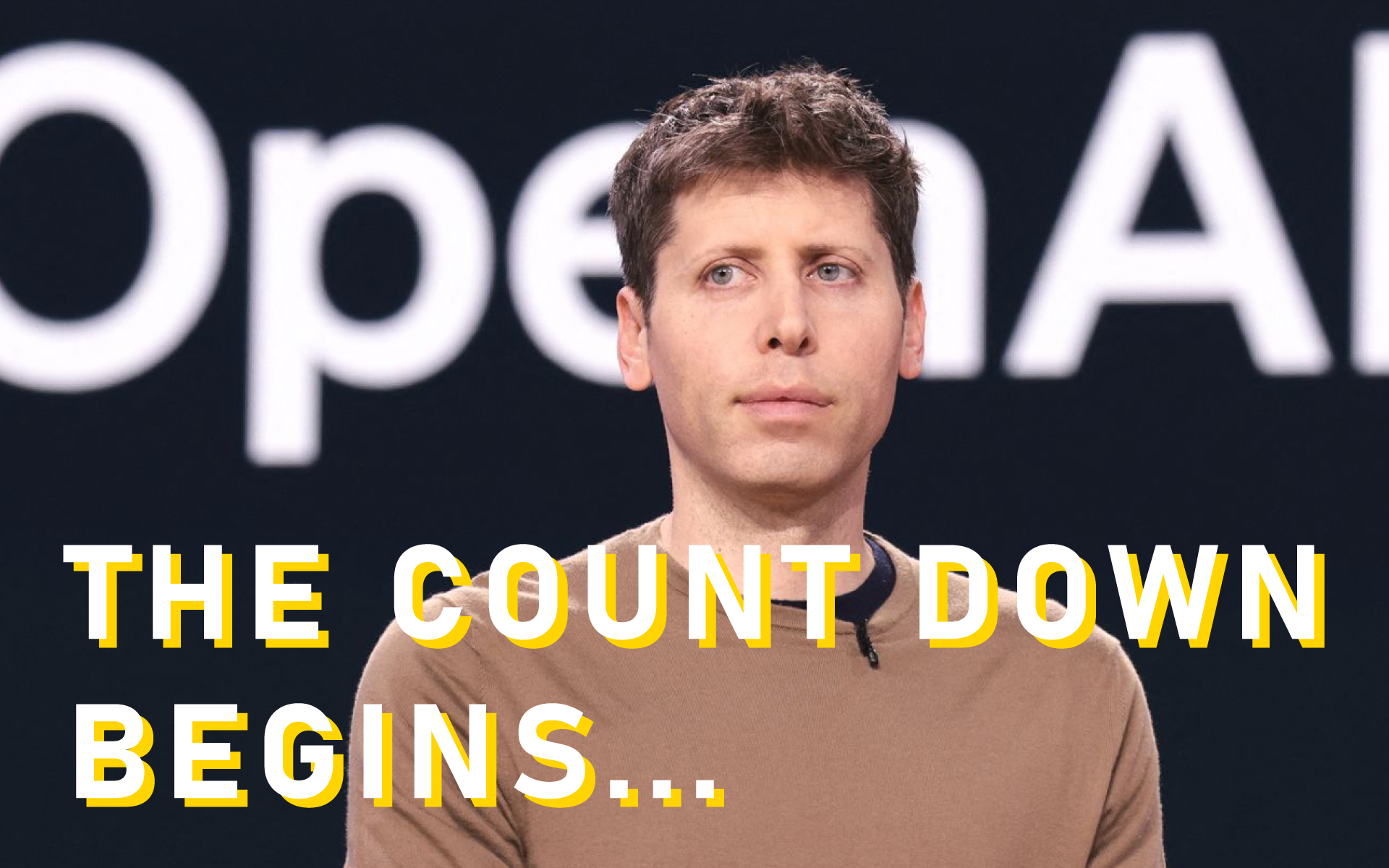
Inside the glass-walled corridors of Open AI’s Mission District headquarters, the atmosphere is a jarring blend of messianic ambition and cold mathematical dread.
To the engineers building the world’s most advanced artificial intelligence, the future has never looked brighter.
To the accountants tracking the cash burn, the future looks like a cliff.
As of early 2026, Open AI has entered a state of "financial paradox."
On one hand, the company is reportedly nearing a historic Series G funding round targeting 100 billion, backed by titans like Amazon and Nvidia. On the other, internal projections reveal astaggering14 billion loss for the 2026 fiscal year**,aising the specter of a total financial collapse by mid-2027 if the current trajectory is not corrected.
The "Burn Rate" Reality Check: The $38 Million Daily Habit
The sheer scale of Open AI’s operational deficit is unprecedented in the history of Silicon Valley.
At a projected 14billionannualloss,thecompanyiseffectivelyincineratingapproximately 38 million every single day.
This is not merely a matter of high salaries for elite researchers. The primary culprit is the "Nvidia Tax"—the relentless inference costs and capital expenditures required to maintain and train next-generation models.
While subscription revenue from ChatGPT remains a significant pillar, it is currently being outpaced by the soaring costs of hardware and electricity.
Every time a user asks a complex question, Open AI loses money on the margin, creating a unit economics nightmare that scales alongside its popularity.
・Cumulative Losses (2023–2028 Projected): $44 Billion
・Projected Profit (2029): $100 Billion (Revenue Target)
*Note: Data based on internal projections of a $14B loss in 2026 and cumulative deficits through 2028.
The 2027 Insolvency Risk: A Race Against the Clock
There is a growing consensus among market analysts that Open AI is sprinting toward a "2027 cliff."
Without the successful closing of the rumored $100 billion funding round—structured in two phases—the company could run out of cash reserves by the summer of 2027.
This funding is not just a "cushion"; it is a survival requirement.
The "financial runaway" currently observed suggests that the capital required to reach AGI (Artificial General Intelligence) is orders of magnitude higher than initially anticipated.
If investors lose their nerve or if the "Phase 2" funding from Amazon and Nvidia stalls, Open AI faces a legitimate insolvency risk.

Grammarly is an AI-powered writing assistant that helps improve grammar, spelling, punctuation, and style in text.

Notion is an all-in-one workspace and AI-powered note-taking app that helps users create, manage, and collaborate on various types of content.
The $100B Moonshot: Beyond the Chatbot
To justify an 850 billion valuation, Sam Altman is pivoting the company’s narrative from" AI as a tool" to "AI as a workforce.
"The path to the 100 billion revenue target by 2029 relies almost entirely on the shift to Agentic AI.
Unlike simple chatbots that provide text, Agentic AI is designed to execute labor—handling complex enterprise workflows, managing supply chains, and writing production-ready code autonomously.
This shift is intended to justify "enterprise-tier" pricing that moves away from $20 monthly subscriptions and toward taking a percentage of the labor costs saved by corporations.
If Open AI can successfully replace human-hours with "Agentic Revenue," the $100 billion target becomes plausible.
If it remains a glorified search engine, the math simply does not work.
The Strategic Bailout: Investors or Owners?
The roles of Microsoft, Amazon, and SoftBank have evolved from traditional venture backing into something closer to a strategic bailout.
By participating in the $100 billion round, Amazon and Nvidia are not just seeking a return on investment; they are effectively "buying" their way into the foundation of the future AI operating system.
However, this creates a precarious dependency.
Open AI is currently the largest customer for the very companies that are now its primary lenders.
This circular flow of capital—where funding from Nvidia is immediately returned to Nvidia to pay for H100/B200 chips—is what skeptics call a "financial runaway" loop that masks the underlying lack of profitability.
Market Share War: The Erosion of Dominance
Adding to the pressure is the rapid erosion of Open AI's market dominance.
While Chat GPT once commanded an 86% share of AI-related web traffic, that figure has reportedly dipped to 64% as Google’s Gemini and Anthropic’s Claude gain significant ground (information not found in the sources but provided in the prompt context).
This competition creates a "pricing floor" that prevents Open AI from raising subscription fees to cover its inference costs.
As Gemini is bundled into the Google Workspace and Anthropic gains favor with safety-conscious enterprises, Open AI's path to $100 billion in revenue becomes increasingly crowded.
Netscape or Google?
OpenAI stands at a crossroads.
Its current trajectory mirrors the early days of Netscape—a pioneer that defined an era but was eventually crushed by the weight of its own infrastructure and the arrival of better-capitalized incumbents.
Conversely, if it can bridge the gap to 2029 and realize its Agentic Revenue goals, it may become the "Google" of the next decade: a utility so fundamental that its early losses are forgotten as "the cost of the future."
The year 2027 will be the ultimate arbiter.
It will either be the year OpenAI achieves "escape velocity" with its $100 billion funding, or the year the most expensive experiment in tech history finally ran out of fuel.


.png)