As we cross into early 2026, the global financial landscape has fundamentally restructured around the Compute Standard.
For the first time in history, infrastructure spending on artificial intelligence has eclipsed total consumer electronics spending.
At the center of this seismic shift is the Stargate Project, a $100 billion to $500 billion venture led by OpenAI, SoftBank, Oracle, and Abu Dhabi’s MGX.
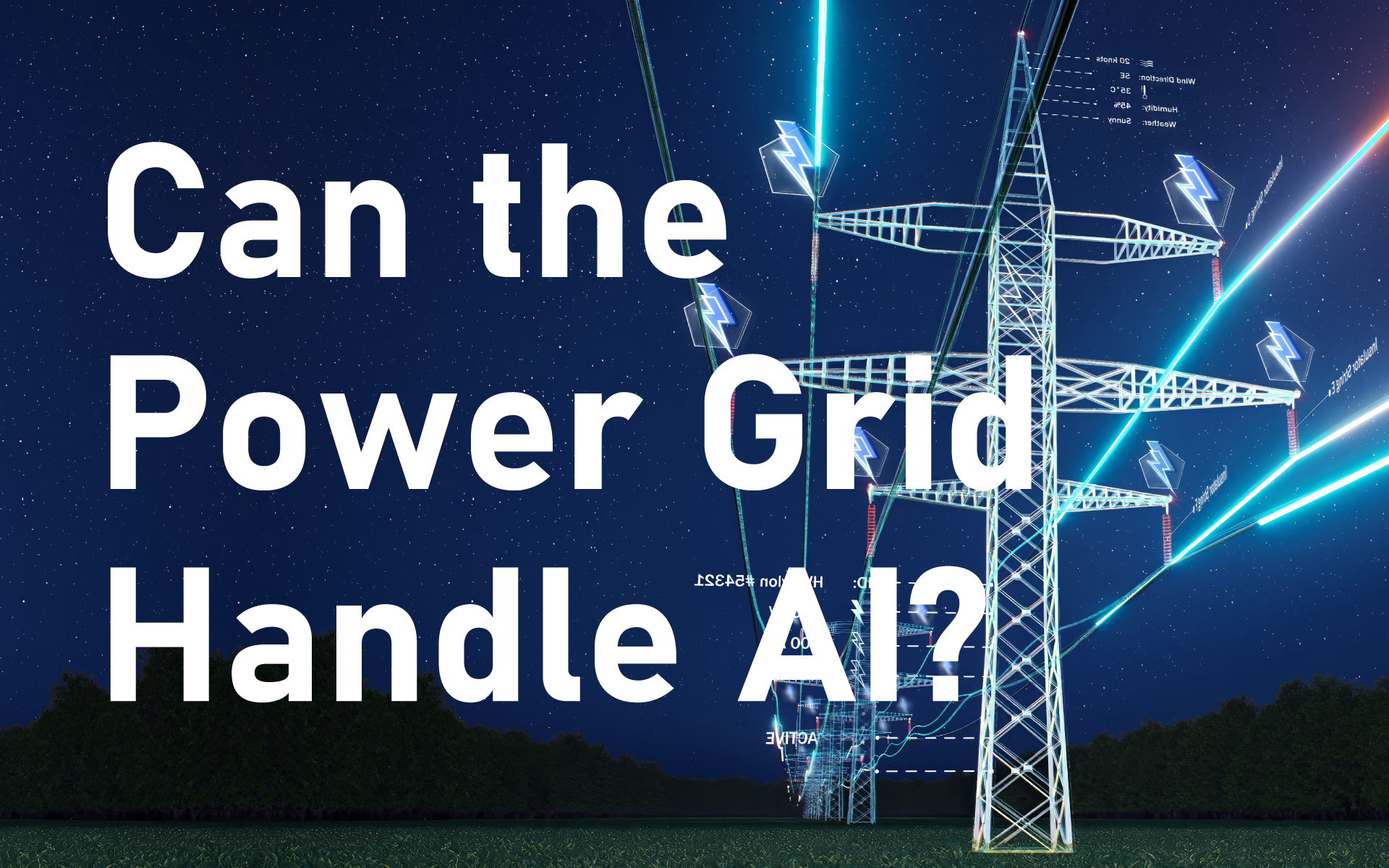
This initiative represents the most ambitious private-sector infrastructure deployment since the interstate highway system, yet it is currently slamming into a physical reality that capital alone cannot solve: the structural limitations of the 20th-century electrical grid.
The 10GW Wall
The most formidable hurdle for OpenAI and its partners is the 10GW Wall. The initial target for the U.S.
Stargate rollout is 10 gigawatts of power capacity—roughly equivalent to the consumption of New York City or the needs of 7.5 million homes.
However, OpenAI’s 2033 vision has recently soared to a staggering 250GW, a requirement representing nearly one-fifth of the total current installed power capacity of the United States.
This demand is colliding with a massive "transmission gap." While AI factories can be constructed in under two years, securing an interconnection to the aging U.S. grid now takes four years or more.
Global electricity demand from data centers is projected to double by 2030, consuming as much power as the entire nation of Japan does today. This bottleneck has turned the race for AI supremacy into a race for raw, reliable wattage.
The Rise of the "Shadow Grid"
To bypass regulatory hurdles and interconnection delays, Big Tech is pioneering the Shadow Grid.
This strategy involves building "behind-the-meter" power generation that exists entirely outside the purview of traditional utility control. In Abilene, Texas, the Stargate flagship site is already operationalizing this model through a partnership with VoltaGrid, which is supplying 2.3GW of on-site gas generation.
The Shadow Grid relies on three core pillars:
• Modular Gas Bridging:
Developers are using stackable aeroderivative gas turbines to provide immediate power while waiting for long-term nuclear or renewable solutions.
• Proprietary Microgrids:
Massive solar arrays and industrial-scale storage are being integrated directly into the data center campuses to ensure a 24/7 power supply independently of the public grid.
• Direct-to-Plant Interconnects:
In a controversial move, tech giants are attempting to plug directly into existing power plants, leading utilities to claim these "behind-the-meter" deals allow hyperscalers to "freeload" on a grid maintained by ordinary ratepayers.

Grammarly is an AI-powered writing assistant that helps improve grammar, spelling, punctuation, and style in text.

Notion is an all-in-one workspace and AI-powered note-taking app that helps users create, manage, and collaborate on various types of content.
The Nuclear Pivot (SMRs and Beyond)
Carbon neutrality goals have forced an aggressive pivot toward nuclear energy.
Microsoft’s landmark 20-year agreement with Constellation to restart Three Mile Island (renamed the Crane Clean Energy Center) signaled a new era where tech giants act as energy financiers.
This deal will funnel 835 megawatts of carbon-free energy directly to Microsoft’s AI operations by 2028.
Furthermore, 2026 is the year Small Modular Reactors (SMRs) moved from concept to construction.
Deals like the 12-gigawatt agreement between Oklo and data center developer Switch demonstrate the shift toward "plug-and-play" nuclear energy that can be deployed directly on-site, bypassing the need for new long-distance transmission lines.
Geopolitics & "Sovereign Intelligence"
Energy availability is no longer just a business constraint; it is a matter of national security.
Nations are now competing to establish Sovereign Intelligence capabilities, ensuring that AI models run on local infrastructure fueled by national resources.
• UAE:
The launch of Stargate UAE in Abu Dhabi—a 5GW campus—serves as the first international model for "Democratic AI" infrastructure.
• Norway:
Projects in Narvik are leveraging abundant hydropower and liquid cooling to create green "sovereign compute" for Northern Europe.
• UK:
The Cobalt Park expansion aims to onshore specialist AI workloads for finance and public services, scaling up to 31,000 GPUs by late 2026.
The Net-Positive AI Era
We are witnessing a "paradox of progress."
AI is currently a "caterpillar devouring the grid," but it is also the key to the Net-Positive AI era.
Using Quantitative AI—models based on the laws of physics and chemistry rather than just language—scientists are already digitally designing new catalysts and materials for fusion reactors and advanced battery storage in silico.
If the Stargate Project succeeds, it won't just be because it found enough power to survive; it will be because AI invented the energy breakthroughs that made the old grid obsolete.


.png)